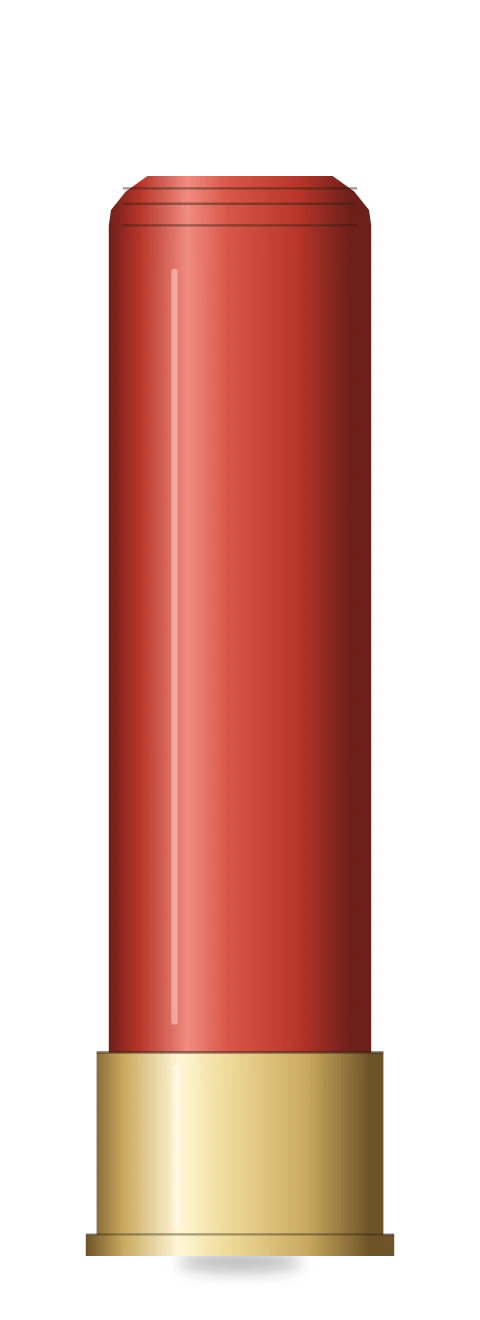
01 / At a glance
The basics
- Origin
- Traditional bore system
- Introduced
- Long-standing
- Ignition
- Centerfire
- Case form
- Rimmed shotshell
- Diameter
- Gauge
- Case length
- 89 mm
Rounded values to help you identify the cartridge, not manufacturing drawings. See the cited standard for exact dimensions and tolerances.
Do not mix it up
A shorter 10 gauge shell can fit a 3 1/2 inch chamber, but a 3 1/2 inch shell must never be fired in a gun with a shorter chamber. A 12 gauge shell can slip forward in a 10 gauge barrel. Never keep different gauges together.
The 10 gauge is the largest shotgun still in common use. Its bore measures about .775 inch, compared with .729 inch for the 12 gauge, and its 3½ inch magnum shell holds up to 2 ounces of shot or more. It was once the standard waterfowl gauge. Today it is a specialist: a heavy gun for geese, turkeys and long shots, chosen by a small number of hunters who want the biggest payload they can legally shoot.
This guide explains what the 10 gauge is, where it came from, how to choose a shell and a gun, and how it compares with the 12 gauge and other sizes. It is a reference page, not a loading manual, and it contains no loading data.
A short history
The 10 gauge comes from the black powder era, when large bores were the way to put a heavy charge of shot in the air. Double guns and early repeaters were built in 10 gauge for market hunters and wildfowlers. The Winchester Model 1887 lever-action shotgun was one of the early repeating designs offered in the size.
Smokeless powder changed things. The 12 gauge could now do much of what the 10 had done, with a lighter gun and a shell that was cheaper to make. Winchester sold 2⅞ inch smokeless 10 gauge shells in the early 1900s, but the gauge slipped from the mainstream.
In the early 1930s Winchester and Ithaca developed a 3½ inch magnum shell for the 10 gauge. It gave waterfowl hunters a long-range load in a gun built to take it. The Ithaca Mag-10, a gas-operated semi-automatic that appeared in the 1970s, and the Remington SP-10, a gas-operated semi-automatic made from 1989 to 2010, were the best-known guns in the size.
Then the 12 gauge caught up again. The Mossberg 835 Ulti-Mag arrived in 1988, and the Benelli SBE a few years later, both chambered for 3½ inch 12 gauge shells. A 3½ inch 12 gauge fires nearly as much shot from a lighter gun. The 10 gauge lost most of its reason to exist for the average hunter, and no major maker now builds a new one. It survives in the used market and among hunters who like it.
Why people still shoot it
The first reason is payload. The 10 gauge carries more shot than any other common gauge. A 3½ inch magnum shell holds 1½ to 2½ ounces of shot, depending on the load, and a wide bore lets the pellets travel in a more open, even column.
The second reason is the large pattern with big shot. Shooters who want to throw steel BB or turkey shot at long range like a gun that can send a lot of pellets into a pattern. In an Outdoor Life test, 10 gauge steel BB loads put about 79 percent of their pellets in the pattern at 40 yards, against about 53 percent for a 12 gauge load, which is a large difference for the shooter who needs it.
The third reason is tradition. Many hunters inherited a 10 gauge, or fell for the idea of a gun that was once the standard for geese. The gauge has a loyal following and a small community of shooters who like its history.
Specifications at a glance
| Specification | Value |
|---|---|
| Nominal bore diameter | About .775 in (19.7 mm) |
| Common shell lengths | 2⅞ in (73 mm, older) and 3½ in (89 mm) |
| Typical pressure (3½ in magnum) | About 11,000 psi |
| Common shot loads | 1½ oz to 2½ oz in 3½ in shells |
| Typical velocity | About 1,200 to 1,450 ft/s, depending on the load |
| Common shot sizes | BB to #6 for waterfowl; #4 to #6 and heavier for turkey |
| Typical gun weight | About 9 to 12 lb |
| Current production | No major maker builds new guns; used guns only |
Values are rounded for reference. The pressure figure is that of a current 3½ inch factory steel load. Exact dimensions and tolerances are in the SAAMI and C.I.P. standards cited at the end of this page.
Strengths and limits
The 10 gauge is a niche tool, and the trade-offs are clear.
| Advantage | Limitation |
|---|---|
| The largest shot charge of any common gauge | The guns are heavy and bulky |
| Open, even patterns with large shot | Shells cost about a dollar each and more |
| Heavy guns soak up recoil | No major maker builds a new gun |
| Useful for geese and turkeys at long range | A 3½ inch 12 gauge does much of the same job |
Honest advice: for most hunters a 12 gauge chambered for 3½ inch shells is the better choice. It is lighter, cheaper to feed and available new. The 10 gauge makes sense when you already own one, or when you like the gun and accept the cost.
Weight and handling
A 10 gauge shotgun weighs 9 to 12 pounds. The weight is helpful for recoil and not for carrying. It is a gun for a blind, a field with a pit, or a stand, not for walking all day. The Remington SP-10 weighs about 11 pounds.
Shot size and what it does
A shotshell fires many pellets rather than one bullet, so pellet size and count matter more than a single trajectory. Smaller shot gives more pellets and denser patterns but less energy per pellet. Larger shot gives fewer pellets with more energy each.
The chart shows lead shot. Steel, bismuth and tungsten alloys have different densities, so the numbers per ounce are different. As an example, a Federal Speed-Shok 3½ inch steel load of 1½ ounces of BB holds about 108 pellets and leaves the muzzle at 1,450 ft/s. Check the box for the count in the load you buy.
| Use | Common shot sizes | Notes |
|---|---|---|
| Geese | Steel BB to #2 | Large shot for long range; check the rules for your area |
| Ducks | Steel #2 to #4 | The 10 gauge is overkill for most duck shooting |
| Turkey | #4 to #6 in heavy or dense loads | 2 oz to 2½ oz loads exist for the 3½ inch shell |
| Pass shooting at long range | Steel BB to #2 | Pattern the load before you count on it |
Recoil and shooter comfort
Recoil is heavy. A 3½ inch load with 2 ounces of shot or more kicks harder than any normal 12 gauge field load. The weight of the gun helps, and a 10 to 12 pound gas-operated semi-automatic like the SP-10 spreads the push out over time. A pump or break-action gun of the same weight kicks harder.
Shoot a few rounds at the range before you hunt with it. A good stock fit, a recoil pad and a firm shoulder position make a large difference. Many shooters flinch with a new 10 gauge, and the flinch ruins the shot. Wear ear protection, since the muzzle blast is loud.
How to choose a shell
Shells for the 10 gauge are made by Federal, Winchester, Remington and a few specialty makers such as Hevi-Shot and Boss. The choice is small, and the price is high.
Shell length
| Length | Typical use | Notes |
|---|---|---|
| 2⅞ in (73 mm) | Older guns | The original smokeless length; few are made now |
| 3½ in (89 mm) | Waterfowl and turkey | The modern standard for the gauge |
Check the chamber length stamped on the barrel before you buy shells. Most guns you will find are chambered for 3½ inch shells. Do not fire a shell that is longer than the chamber.
Load weight
Loads run from about 1½ ounces to 2½ ounces. Turkey loads of 2 ounces at around 1,200 ft/s are common, and heavier loads such as Apex at 2½ ounces are made. Waterfowl loads often use 1½ ounces of steel. A heavier load kicks harder and does not always pattern better, so test several.
Lead and non-toxic shot
The United States banned lead shot for waterfowl hunting nationwide in 1991, after a phase-in that began in 1987. Waterfowl hunters must use steel or other approved non-toxic shot. Bismuth, tungsten and other alloys are options for hunters who want denser pellets. Do not fire steel shot in an older gun with a soft barrel unless the maker says it is safe, and check the rules where you hunt.
Cost
A shell for the 10 gauge often costs about a dollar or more. Practice is expensive, so plan to pattern the gun with a few shells and rely on dry mounting and practice with another gauge for most of your skill work.
How to choose a shotgun
Since no major maker builds new 10 gauge guns, you will be buying used. These are the points that matter most.
- Action. Gas-operated semi-automatics like the Remington SP-10 and the Ithaca Mag-10 soften recoil. Pump guns and break-action guns are lighter and kick harder.
- Brand and model. Used guns include the Browning BPS and Gold, the Ithaca Mag-10 and the Remington SP-10. Prices run from about $1,000 to $3,000, depending on the model and condition.
- Condition. Check the bore for pitting and dents, the chamber, the action and the finish. Gas guns need clean, working parts.
- Chamber length. Confirm that the gun takes 3½ inch shells.
- Chokes. Many guns have screw-in tubes. Make sure you can find tubes for the gun, since the aftermarket is small.
- Fit and weight. Handle the gun before you buy. A heavy gun that does not fit you is hard to shoot.
Chokes and patterning
A choke is a narrowing at the muzzle that controls how tightly the shot spreads. A tighter choke holds the pattern together for longer shots. A more open choke gives a wider pattern for close targets. With steel shot, avoid a very tight choke unless the maker says it is safe. A modified or improved modified choke is a common choice.
| Choke | Constriction | Typical use |
|---|---|---|
| Cylinder | None | Very close range |
| Improved cylinder | Light | Close geese over decoys |
| Modified | Medium | All-around waterfowl |
| Full or extra-full turkey | Tight | Turkeys and long shots, with a load rated for the choke |
Patterning means firing at a large sheet of paper at 40 yards and counting the pellets inside a 30 inch circle. It shows how your gun, load and choke work together. With a shell this expensive, patterning is worth the cost, since a load that patterns poorly will cost you birds. Pattern before the season, not during it.
Practical uses
Waterfowl
The 10 gauge was built for geese and large ducks. The 10 gauge is the largest gauge permitted for waterfowl under the 1916 treaty. A 3½ inch steel load gives large steel shot good range. Many hunters now use a 3½ inch 12 gauge for the same job.
Turkey
This is the other main use. A heavy load of 2 ounces or more of shot and a tight choke give a dense pattern at 40 yards and beyond. Pattern the gun with each load, since turkey loads vary a lot.
Predator and pest control
It can be used for coyotes and other predators with the right shot, though the cost and weight make it an odd choice for this job.
Collecting and tradition
Many 10 gauge guns are kept for their history. The Ithaca Mag-10 and the Remington SP-10 have collectors, and some hunters keep one as a family gun.
10 gauge vs similar gauges
The table lists the gauges most often compared with the 10 gauge. Figures are rounded.
| Gauge | Bore diameter | Common shot load | Typical use |
|---|---|---|---|
| 10 gauge | .775 in | 1½ to 2½ oz | Geese, turkey and long shots |
| 12 gauge | .729 in | 1 to 1⅜ oz (up to 2 oz in 3½ in magnums) | All-round hunting and clays |
| 16 gauge | .662 in | 1 to 1⅛ oz | Upland birds and small game |
| 20 gauge | .615 in | 3/4 to 1 oz | Upland birds, light hunting and clays |
Against a 3½ inch 12 gauge, the 10 carries a larger charge and a wider bore, in a heavier gun that costs more to feed. For most hunters the 12 is the sensible choice. Against the 16 and 20 gauges, the 10 is a different tool entirely: heavy, hard-kicking and aimed at big birds at long range.
Care and storage
Clean the barrel after each session, pushing a brush and patch through the bore, and clean the gas system if the gun is a gas-operated semi-automatic. Wipe the action and apply a light oil. Waterfowl guns face wet and salt, so dry them and wipe the metal after every hunt. Store shells in a cool, dry place, away from other gauges. Keep firearms and ammunition locked and apart, away from children.
Safety and common mistakes
- Never keep 10 gauge shells with 12 gauge shells. A 12 gauge shell can slip into the chamber of a 10 gauge gun and lodge in the bore, which can burst the barrel if a 10 gauge shell is then fired. Keep the gauges apart and read the headstamp.
- Check the gauge marked on the barrel before you load. Match the shell to the gun every time.
- Do not fire a 3½ inch shell in a gun with a shorter chamber.
- Do not fire steel shot in an older gun with a soft barrel unless the maker says it is safe.
- Expect heavy recoil. Use a recoil pad, wear ear protection and stand firmly to avoid injury.
- Treat every firearm as loaded. Keep your finger off the trigger until your sights are on the target.
- Know your target and what is beyond it. Shot can travel a long way.
- If you reload, use only published data from a current manual and start low. This page does not contain loading data.
Frequently asked questions
Is the 10 gauge bigger than the 12 gauge?
Yes. Its bore is about .775 inch, compared with .729 inch for the 12 gauge, and it carries a larger shot charge.
Is anyone still making 10 gauge shotguns?
No major maker builds new ones now. Browning stopped, and the Remington SP-10 and Ithaca Mag-10 are no longer in production. Used guns are the way to buy.
How much does a 10 gauge shell cost?
About a dollar or more per shell, which is higher than 12 gauge ammunition.
Is the 10 gauge better than a 3½ inch 12 gauge?
It carries a bigger charge and patterns steel BB well, but the gun is heavier and costs more to shoot. For most hunters a 3½ inch 12 gauge does the job.
How much does a 10 gauge shotgun weigh?
About 9 to 12 pounds. The Remington SP-10 weighs about 11 pounds.
Can I use steel shot in a 10 gauge?
In a modern gun made for it, yes, and waterfowl hunting requires non-toxic shot. Do not fire steel in an older gun with a soft barrel unless the maker says it is safe.
What is the recoil of a 10 gauge?
Heavy. The weight of the gun helps, and a gas-operated semi-automatic softens the push, but a 3½ inch load kicks harder than a normal 12 gauge load.
Can a 12 gauge shell get stuck in a 10 gauge gun?
Yes. A 12 gauge shell can slip into a 10 gauge chamber and lodge in the bore. Firing a 10 gauge shell behind it can burst the barrel. Keep the gauges separate.
Sources
Sources reviewed · 29 October 2026